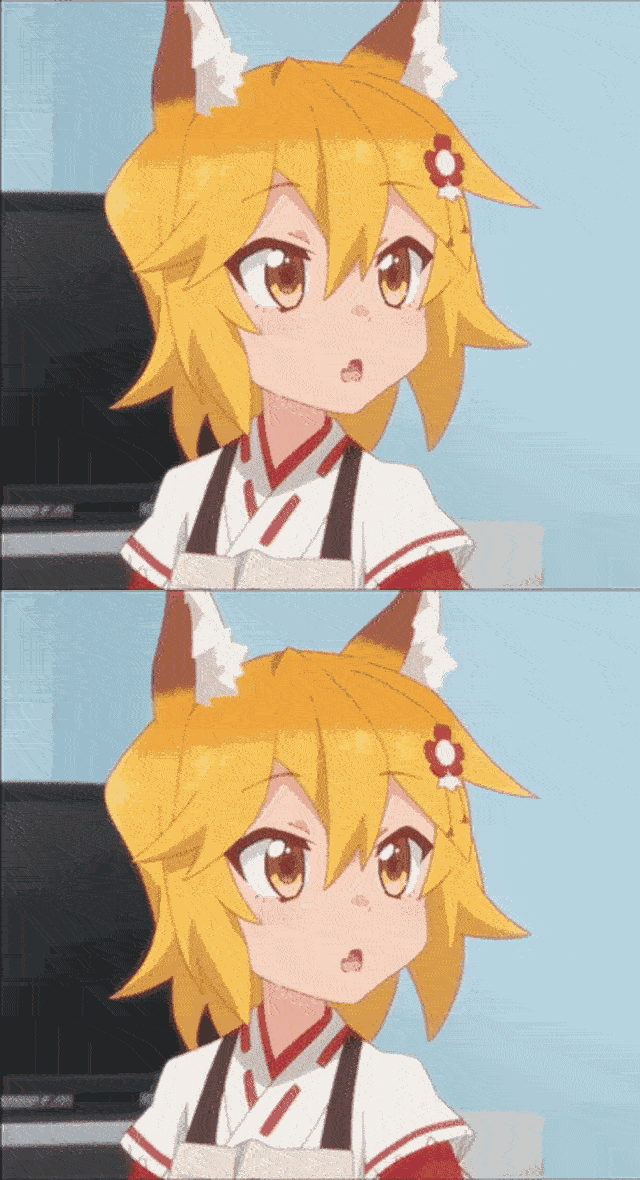
Kemonomimi are individuals who have animal features, but typically a human base. Originally derived from anime tropes, it may be used as an identity within alterhuman spaces, however it can be used simply for self-expression, or simply a stylistic choice. This is not a feitsh nor kink.
The term "kemonomimi" translates from Japanese to "animal ears;" and as such, there are numerous terms for various 'species' of kemonomimi. The suffix "-mimi" and "-musume" mean "ears" and "daughter"/"girl" respectively. However, being kemonomimi can include more than simply ears of an animal; and isn't restricted to women, girls, fem-aligned individuals, etc.; as any individual of any gender(s) may identify as such. Examples of such features may include (but are not exclusive to): ears, horns, wings, tails, fins, and antennae.
The vast majority of the information within this article is anecdotal; there hasn't been any academic studies as of yet. However, this article is intended to be as neutral and inclusive as possible, and will be updated when needed. If your identity or definition isn't included here, you are still just as valid as anybody else.
Flag
The chosen flag for kemonomimi appears in the upper-right corner of this article. It has five horizontal stripes, being light brown, dark brown, ash brown, white, and dark grey respectively. The symbol in the centre is a symbol for kemonomimi; similarly to how furries & anthros can (but not always) have a paw print symbol.
Description
Like in the prior section, kemonomimi can typically be considered human, humanoid, or human-like individuals with animal characteristics. Such animal characteristics may include, but isn't exclusive to: ears, tails, fins, horns, antennae, and wings. Some individuals may choose to have a snout or similar, but snouts aren't seemingly very common. Individuals may act or behave animalistic, however others may not. The 'intensity' of this may differ greatly from one to another.
The above definition is a general description, not a diagnosis. By that, it means the definition is in no means official, and ultimately comes down to the individuals themselves. If your definition or version hasn't appeared, you are just as valid!
Language
Common Terms
A less common term for kemonomimi is thiren (thy-REN), likely introduced in the video game Zenless Zone Zero. It can be considered an alternate term to kemonomimi. One may wish to use the term over kemonomimi if they find it more comfortable.
The suffix -mimi is occasionally used as shorthand slang to refer to kemonomimi.
When typing or writing, adding an '-s' to the end of kemonomimi can sound awkward and isn't exactly right. For example, if referring to many kemonomimi, it should be said or written more like "a kemonomimi", "several kemonomimi", and "many kemonomimi". But for alternate terms like thiren, it can be written or typed as "thirens" as opposed to "a thiren", "many thiren", etc.
Kemonomimi Types
These terms are some of the more common terms for kemonomimi types. This isn't intended to be an exhaustive list, and many kemonomimi individuals may blend traits, use animals and/or species not included here, etc. However, if your type doesn't appear here, you're still just as valid!
Araigumamimi / Araigumamusume - 'raccoon ears' or 'raccoon daughter.'
Hitsujimimi / Hitsujimusume - 'sheep ears' or 'sheep daughter.'
Inumimi / Inumusume - 'dog ears' or 'dog daughter.'
Kitsunemimi / Kitsunemusume - 'fox ears' or 'fox daughter,' the second most common variant after nekomimis.
Kōmorimimi / Kōmorimusume - 'bat ears' or 'bat daughter.'
Nekomimi / nekomusume - 'cat ears' or 'cat daughter,' nekomimis are the best-known.
Nezumimi / Nezumusume - 'mouse/rat ears' or 'mouse/rat daughter.'
Okamimimi / Okaimimusume - 'wolf ears' or 'wolf daughter.'
Umamimi / Umamusume - 'horse ears' or 'horse daughter.'
Usagimimi / Usagimusume - 'rabbit/bunny/hare ears' or 'rabbit/bunny/hare daughter.'
There are also Pokémon kemonomimi. For example, a Pikachu kemonomimi individual can be referred to as "pikachumimi". However, to refrain from making the above list exhaustive, individual Pokémon kemonomimi types aren't listed here.
Words
Many, but not all kemonomimi individuals are okay with being called a 'pet', however not all are. Some may feel uncomfortable by so. Due to the often fetishised nature of the term, it is more respectful to understand and abide by one's boundaries, whether they're comfortable or not by the usage of the term.
For example, calling one a "good boy/girl/enby/etc" may make them feel uncomfortable. As such, many individuals are only okay if it's done with other individuals they trust. This is because it may feel objectifying or fetishizing when used out of the blue, especially by strangers.
Differences to the Furry Fandom
Kemonomimi are typically not considered part of the furry fandom, however many kemonomimi share experiences with many furries & anthros. However, an individual may wish to consider themselves part of the furry fandom if one feels like so.
Kemonomimi are typically visually different, featuring human skin, and usually a humanoid face. However, similar to fursonas, kemonomimi individuals may feel to have features not included here, as the definition is a common definition. In many cases (often more recently in niche online spaces), spaces may include kemonomimi alongside furries as both are similar but not the same, and to make it more inclusive.
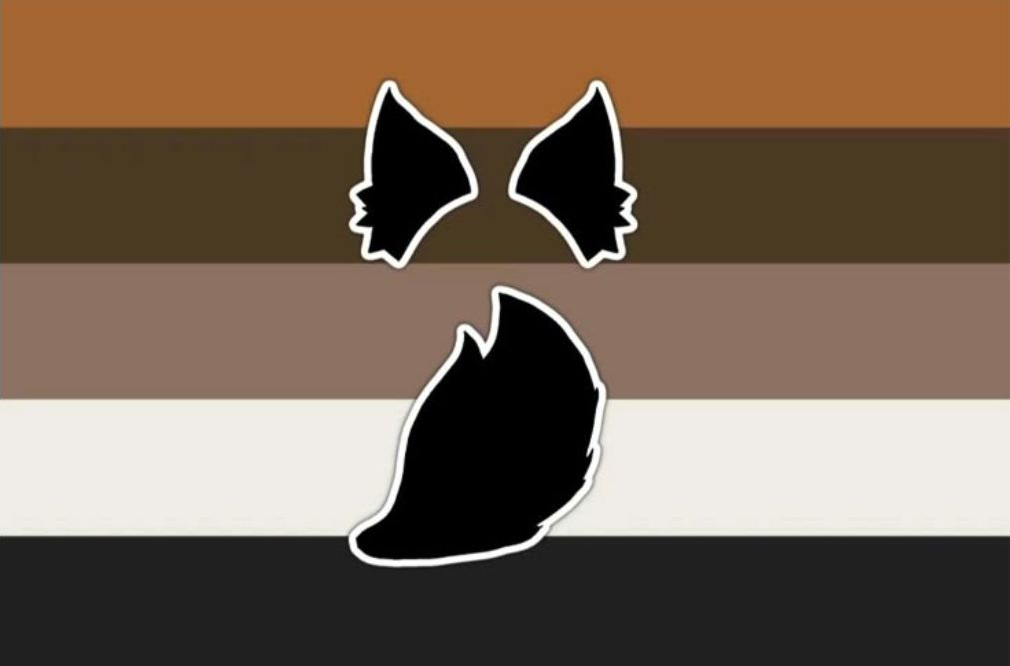
 The chosen flag for kemonomimi appears in the upper-right corner of this article. It has five horizontal stripes, being light brown, dark brown, ash brown, white, and dark grey respectively. The symbol in the centre is a symbol for kemonomimi; similarly to how furries & anthros can (but not always) have a paw print symbol.